
South Africa, Summer 2026: June 11-July 18
The International Centre of Non-Violence (ICON) at the Durban University of Technology (DUT) recently hosted staff and students from George Mason University (USA) for the Building Bridges South Africa (BBSA) programme.
Group Travel Program
The Center for Leadership and Intercultural engagement through the Building Bridges South Africa (BBSA): Breaking the Walls, seeks to provide student participants with field placements that create transformational experiences addressing global social and cultural issues.”
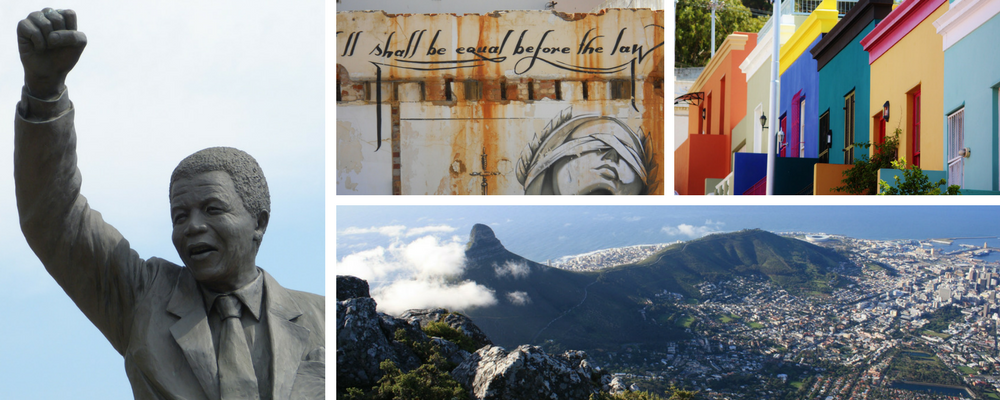
There are two sides of Table Mountain, and the view that is often sold to visitors is one of luxury with heavy Western/European influences. BBSA offers students a look of the other side of the mountain where the stories of the most disproportionately harmed often go ignored (i.e. legacy building, fights for survival, and the power of community). In addition to our time in Cape Town we will also experience Zulu people and culture in the Durban Metropolitan area. What sets this particular experience aside from other study abroad experiences, is the use of the environment/country as the classroom. Students will gain valuable skills and knowledge working directly with local people from townships in both Durban and Cape Town.
Our task is to build an international base for understanding culture and health. Some partners include non-governmental organization (NGO’s) that do advocacy work centered around health prevention, youth & community development, and civic engagement.
- Analyze and describe the HIV and AIDS pandemic in the context of South Africa or Western Cape Province
- Explore and critique cultural and environmental factors that promote healing and wellbeing, while witnessing the different attitudes influence and shape political behavior, laws, and policies.
- Integrate and frame key academic frameworks ranging from : health promotion to conflict resolution and peace building strategies.
- Students will be able to discuss different ways cultural background and their historical underpinnings effect the development and implementation of domestic policing policies.
- Moreover, they will be able to describe and critique the ways in which attitudes around identity are theorized, discussed, marginalized and/or weaponized.