
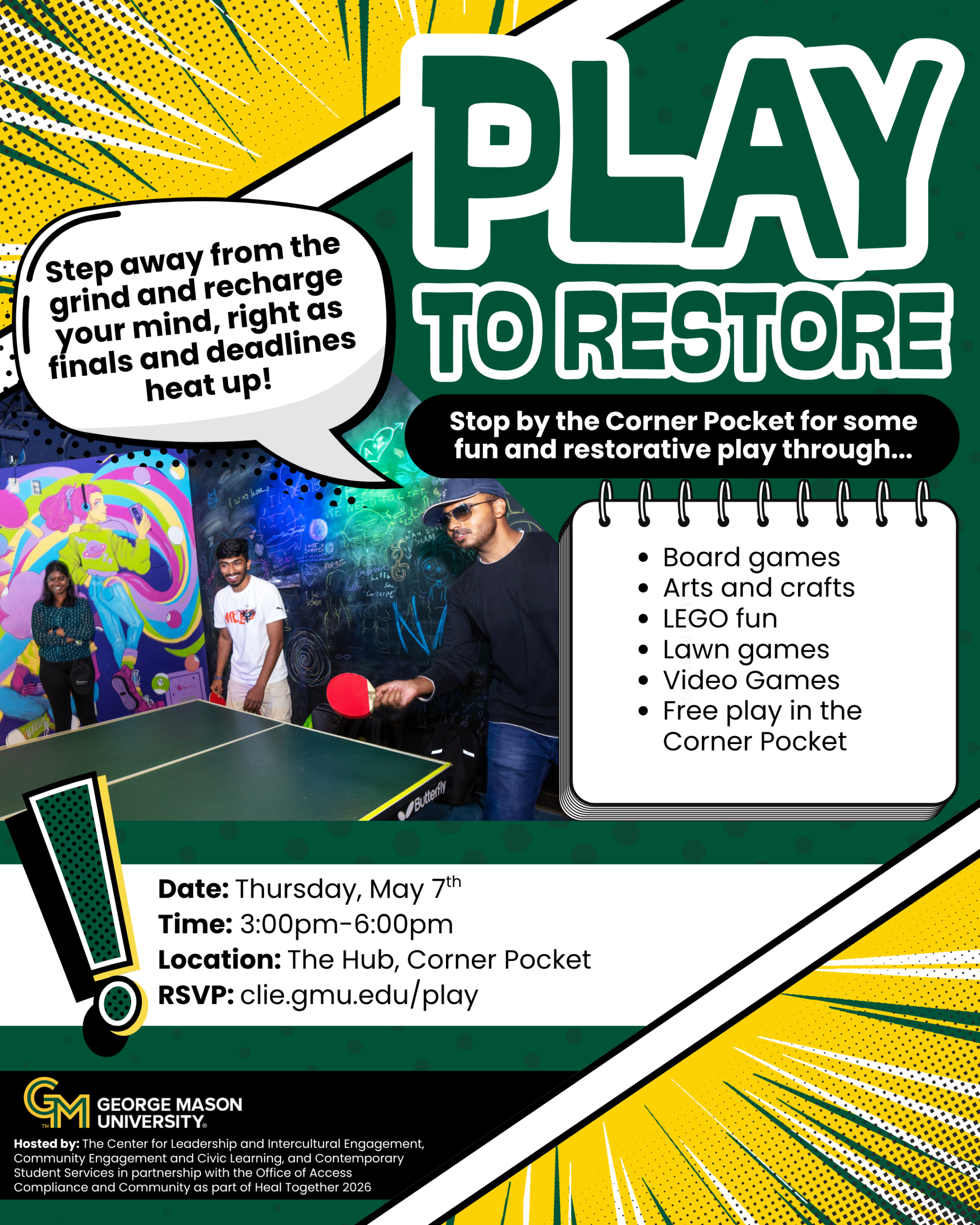
Play to Restore is a drop‑in restorative experience designed to support the Heal Together 2026: Rest initiative. Rooted in the belief that rest can take many forms, this program invites the campus community to step away from academic and work demands and engage in playful, creative, and low-pressure activities that help reset the mind and body.
Participants will have access to a variety of restorative play options, including board games, coloring, crafting, LEGO building, outdoor lawn games, video games, and free play within the Corner Pocket. This space encourages community members to slow down, reconnect with joy, and experience rest not as withdrawal, but as a meaningful practice of healing and renewal. Whether someone comes alone to quietly color or joins others for collaborative gameplay, Play to Restore offers a welcoming environment where rest is respected, community is honored, and restoration is accessible.
Play to Restore is hosted by: The Center for Leadership and Intercultural Engagement, Community Engagement and Civic Learning, and Contemporary Student Services in partnership with the Office of Access Compliance and Community as part of Heal Together 2026
In a culture that often equates productivity with worth, rest can become something we postpone, justify, or feel guilty for. Play, particularly low-stakes, creative, or social play, offers a powerful counterbalance. It serves as active rest: a state where the mind is engaged but not taxed, and the body is relaxed rather than depleted.
Play supports restoration by:
- Reducing Cognitive Load: Play allows the brain to shift away from constant decision-making, problem-solving, and academic or work-related thinking. Activities like coloring, crafting, or building with LEGOs activate calming neural pathways and help reset overstimulated systems.
- Creating Emotional Breathing Space: Play provides an outlet for joy, curiosity, and exploration—emotions that often get set aside in high-pressure environments. This emotional lightness helps regulate stress and supports emotional resilience.
- Encouraging Social Connection: Games and creative activities foster gentle interaction and collaboration. These low-pressure connections can reduce feelings of isolation, build belonging, and strengthen the campus community.
- Offering Non-Productive Time (on Purpose): Restorative play disrupts the idea that every moment must be “useful” or “efficient.” It gives permission to pause, breathe, and exist without expectation—an essential element of holistic well-being.
- Supporting Mind–Body Regulation: Play often brings the nervous system into states of calm engagement (sometimes called “rest-and-digest”), helping counter chronic stress and promote physical restoration.
By participating in Play to Restore, students, staff, and faculty will be able to:
- Recognize Rest as a Diverse Practice: Identify at least one form of play that supports their own sense of rest, renewal, or emotional reset
- Understand the Connection Between Play and Well-being: Describe how playful engagement can reduce stress, improve cognitive functioning, and support social connection
- Practice Intentional Rest: Engage in activities that encourage slowing down, mindfulness, and present-moment awareness
- Build Community Through Low-Stakes Interaction: Participate in shared moments of play that foster belonging, collaboration, and interpersonal connection
- Reflect on Sustainable Approaches to Well-being: Articulate how integrating small moments of play or creative expression into daily life can enhance long-term resilience and capacity for learning and caring for others
- Date: Thursday, May 7th
- Time: 3:00pm-6:00pm
- Location: The Hub, Corner Pocket
- RSVP via Mason 360: link coming soon...
- RSVP via Mason 360: link coming soon...